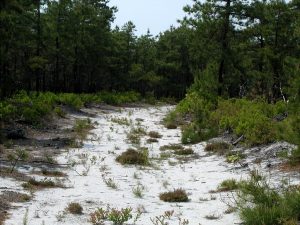
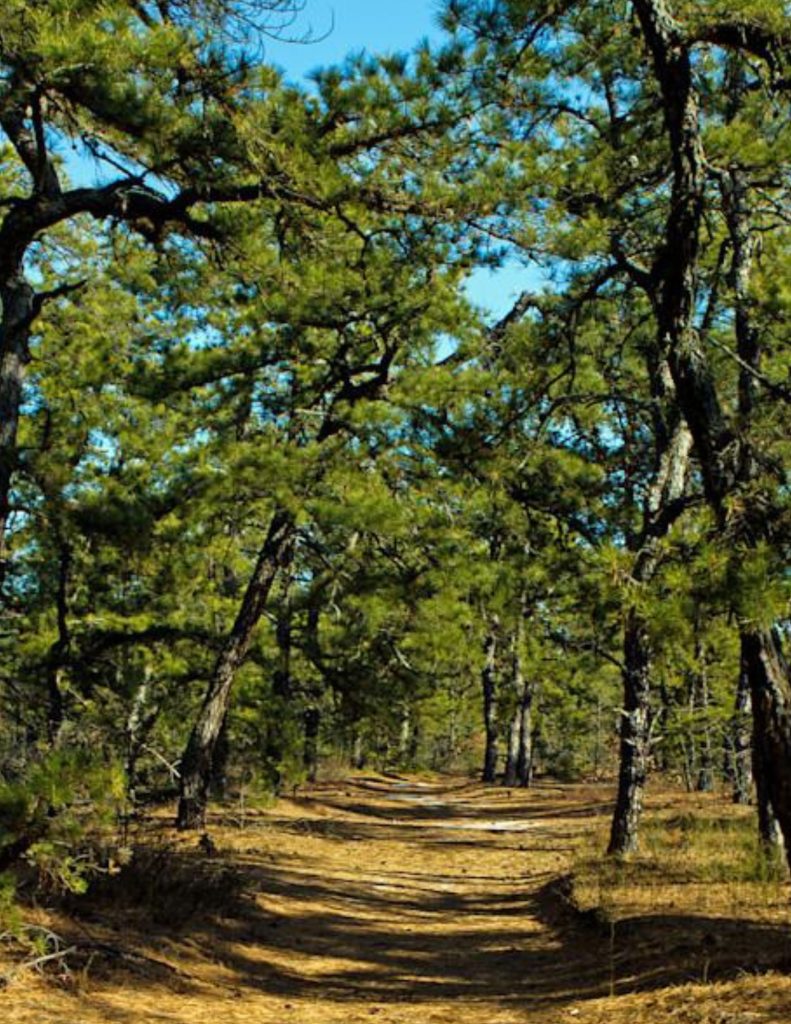
When European settlers first arrived in this region, they saw vast stretches of sandy, acidic soil covered with pitch pine forests. This land seemed poor and unproductive compared to the fertile farmlands elsewhere in New Jersey.
In reality, the land was far from useless. To the European settlers, it was “barren,” not really because the land was truly barren, but because they judged it by the wrong standards. They focused on European-style traditional farming and economic gain, labeling it the “Pine Barrens,” a name that stuck for centuries. Actually, it was only “A large pine forest growing on land considered barren for agriculture.”
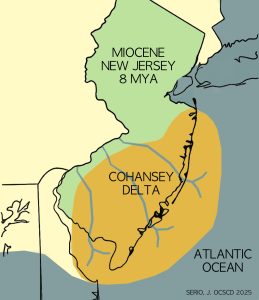
Ecologically, the region is characterized by flat landscapes and sandy, acidic soils that were deposited millions of years ago when the Atlantic Coastal Plain was submerged beneath the Atlantic Ocean during the Cretaceous period and Tertiary period, roughly 135 to 5 million years ago.
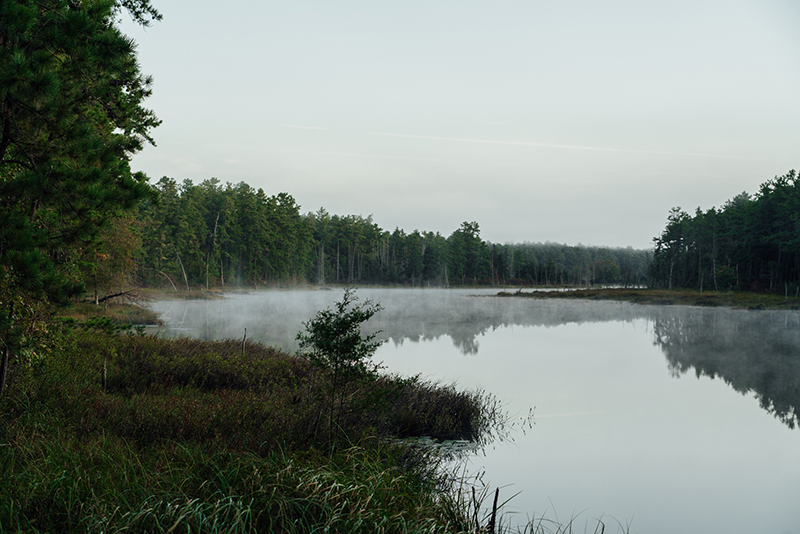
Over millions of years, the processes of sediment deposition, changing sea levels, and erosion shaped the landscape and water systems of what we now call the Pine Barrens. Because the land is so flat, streams in the Pinelands tend to be slow-moving and shallow, flowing gently across the sandy terrain.
In addition, the Pine Barrens sit above the Kirkwood-Cohansey Aquifer, a shallow underground water system that supplies about 90 percent of the water flowing into the region’s streams, rivers, and wetlands. Together, the sandy soils and these groundwater-fed waterways create the special conditions that sustain this ecosystem. Across New Jersey, this interconnected network of rivers, wetlands, and groundwater forms a vital natural system that provides water and supports life for millions of people.
The soil in the New Jersey Pine Barrens is over 90% sand, and sandy soil drains water extremely quickly, which is detrimental for crops such as wheat, corn, and vegetables that require consistent moisture. Pitch pines and other native pines are adapted to these low-nutrient conditions. They grow slowly, conserving energy, and can use the limited nutrients available efficiently. They have deep root systems that can reach water far below the surface, so they can survive in soil that would dry out crops. This soil is naturally acidic (pH often 4–5), with low levels of nitrogen, phosphorus, and potassium, which are the essential elements for fast-growing agricultural plants that prefer neutral to slightly acidic soil (pH 6–7).
Pine ecosystems are also fire-adapted. Natural fires clear out other vegetation and recycle nutrients. Au contraire, crops are not adapted to regular fire and would be destroyed, while Pines can resprout from roots or cones, keeping them dominant.
The Pines supported a rich ecosystem, provided timber, bog iron, and berries, and sustained Native Americans for thousands of years. When the first people arrived 10,000 years ago, the land looked very different. The region was colder and harsher, resembling a tundra rather than the pine forests seen today. Over thousands of years, the climate slowly warmed, and rising sea levels reshaped the landscape. By around 5000 B.C., the region had begun to resemble the Pinelands we recognize today. Native people continued to live off the rich natural resources of the forest, gathering plants, fishing, and hunting while gradually developing more advanced tools made from stone and bone. These tools, preserved in the soil, allow archaeologists to follow the long story of human life in the Pinelands across many generations.
The Pine Barrens is one of the most unusual landscapes in the eastern United States. Covering about 1.1 million acres across southern New Jersey, it is not just a vast forest of pine trees, but an ecologically unique environment with sandy soil, tea-colored rivers, and scattered historic villages. Despite being so large, it remains one of the most sparsely populated regions in the state.
Kirkwood-Cohansey aquifer system: The shallowest major water-bearing layer.
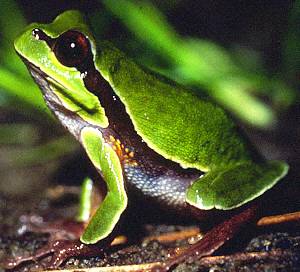
Underneath the forest, the Kirkwood-Cohansey Aquifer provides approximately 90% of the flow to the streams and rivers in the Pinelands. This shallow water system has been tapped by local settlers, threatening the fragile balance of many rare plants and animals. The 17 trillion-gallon aquifer is one of the East Coast’s largest reserves of freshwater and is vulnerable to pollution from residential and agricultural runoff. This expanse of trees was shaped in part by the seasonal burnings of native Lenni Lenape people. Today, fires are still a carefully tuned occurrence in the natural ecosystem. As the largest area of relatively undeveloped land in the northeast corridor, the Pinelands National Reserve occupies over 20% of the state’s land. It contains more than 500 species of animals and 800 species and varieties of plants, including the timber rattlesnake, corn snake, and pine barrens tree frog. There are even some plants that eat insects, such as the Pitcher plant. This unique forest ecosystem depends on a fragile aquifer that is under constant threat from overuse and pollution by a growing urbanized population.
How Protection Took Root
Early protection of the Pine Barrens did not happen suddenly; it developed gradually over decades as people began to recognize the area’s value. By the late 1800s, settlers unintentionally protected the land when their attempts at farming failed due to its poor, acidic soil. They then turned to industries such as iron production and glassmaking, but these too eventually declined. As a result, large areas were abandoned and left undeveloped.
One key moment came when Joseph Wharton, a Philadelphia industrialist and financier, began assembling land in 1876, hoping to grow warm-weather crops such as sugar, cotton, and sugar beets, but he failed. Although he later sought to use the region’s water for the needs of Philadelphia, the New Jersey legislature passed a law prohibiting that use. Nevertheless, his ownership helped prevent the land from being heavily subdivided or developed.
Wharton State Forest
The state then began gradually purchasing land, establishing areas such as Wharton State Forest and Bass River State Forest, which were formally created in 1905. These forests were originally intended for timber management, fire control, and public recreation, protecting large portions of the Pine Barrens from development.
After World War II, suburban growth spread rapidly across New Jersey, raising concerns about the loss of open land, pollution of the Kirkwood-Cohansey Aquifer, and the threat of overdevelopment to a fragile ecosystem. Scientists and environmental groups began studying the region and warning that the Pine Barrens were globally unique and worth protecting.
Roughly 45 years after the death of Joseph Wharton, the state purchased about 97,000 acres of pine forest—including villages, sections of three rivers, several ghost towns, and vast underground water reserves capable of supplying much of southern New Jersey—for $3 million.
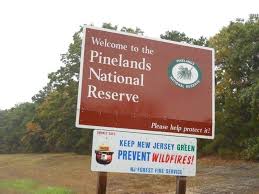
The turning point came in the 1970s, when development pressures intensified. Plans for highways, large housing projects, and increased water extraction raised serious concerns about the region’s future. In response, political action led to the passage of the National Parks and Recreation Act of 1978, which created the Pinelands National Reserve—the first National Reserve in the United States. The area was later recognized by UNESCO as an International Biosphere Reserve.
That is why the Pine Barrens still exists today—it was ignored in the 1800s because it was unsuitable for farming, then managed by state ownership in the early 1900s, and finally received environmental protection in the 1970s when laws officially safeguarded the entire region.
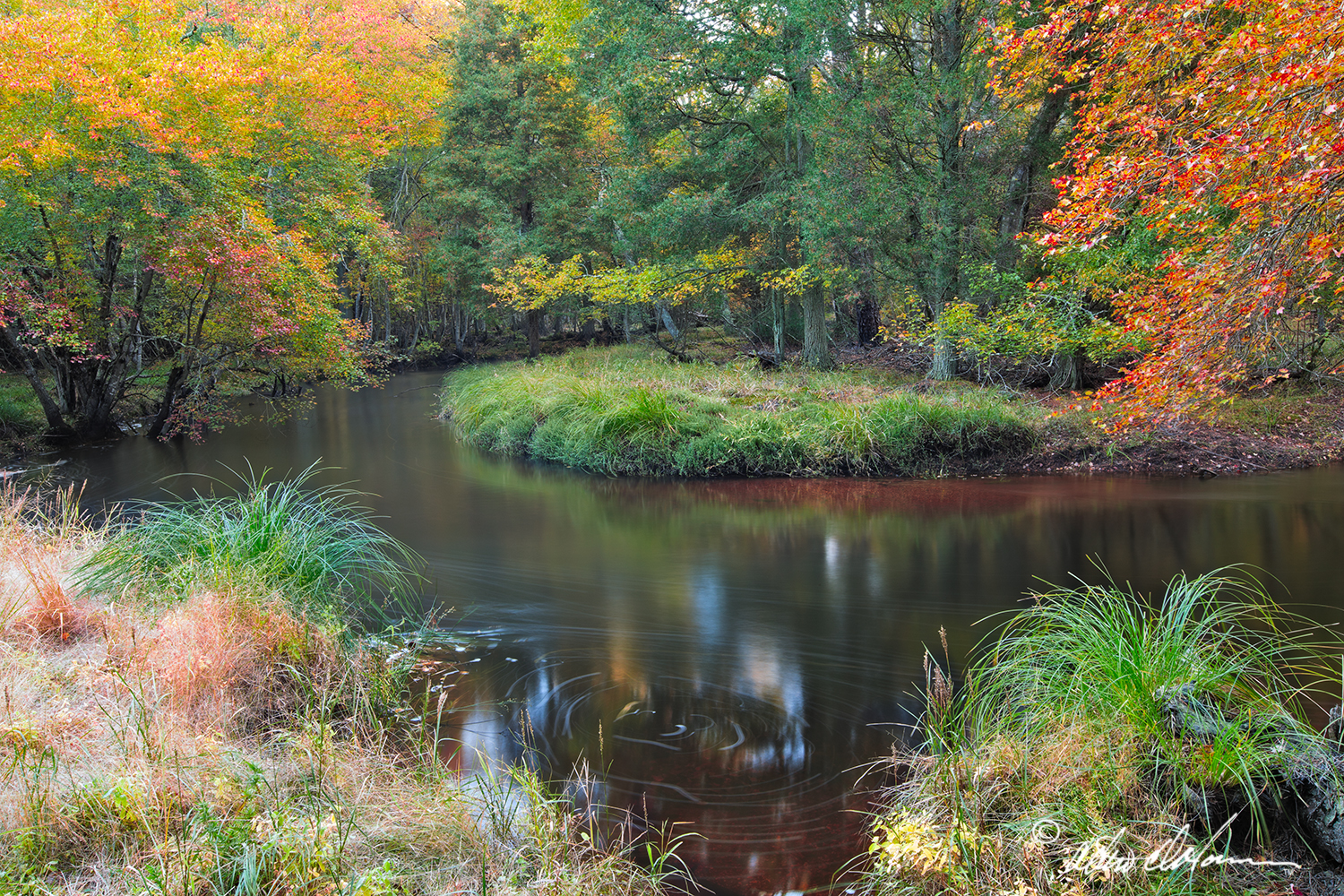
Nature itself has also aided this effort, as the forest is adapted to periodic fire, which naturally sweeps through the landscape every few decades. Beneath the sand lies the Kirkwood-Cohansey aquifer, one of the largest freshwater reserves on the East Coast, holding trillions of gallons of water. Rivers such as the Mullica River and Batsto River appear tea-colored due to tannins released from decaying pine needles and cedar roots, similar to the natural compounds that color tea leaves. These unique rivers attract nature lovers, photographers, and paddlers exploring one of the most ecologically unique landscapes in the eastern United States.
A place where industry once thrived
Although farming failed, the Pine Barrens became surprisingly important during the colonial era because of Iron furnaces that used local bog iron to produce tools and weapons. These vast forests were cut to make charcoal for smelting iron. These industries collapsed because the iron ores were low-grade, requiring more fuel and labor than was profitable, and there were better iron sources in Pennsylvania and other states, making Pine Barrens iron uncompetitive.
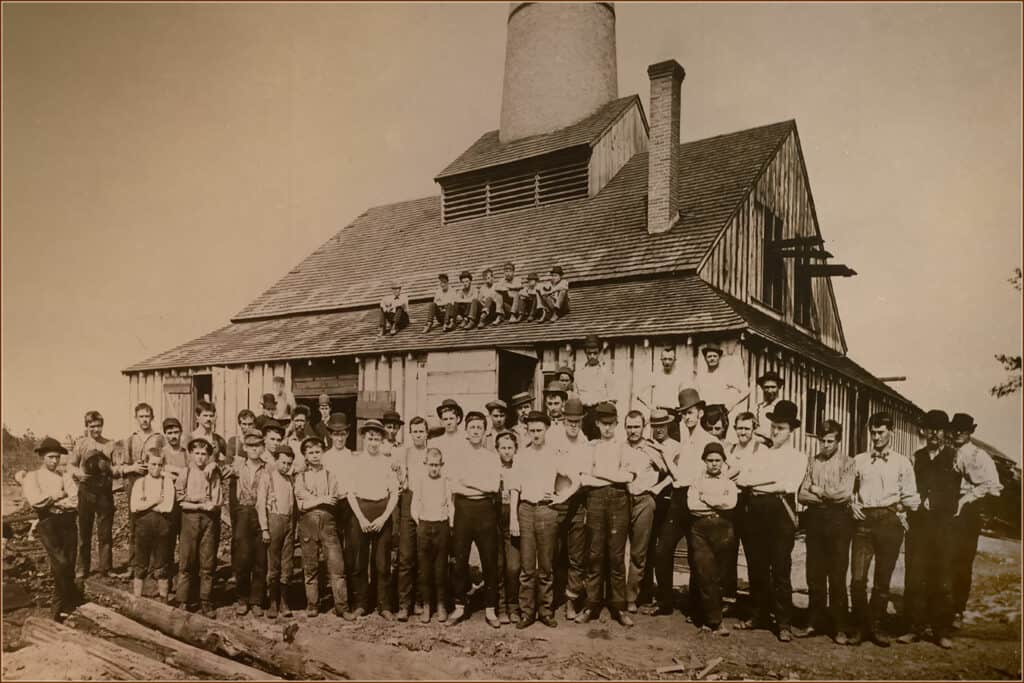
Glass factories thrived because the sand was perfect for glassmaking. But soon, glassmakers faced competition from larger factories near cities with better transport. The region had just a few rivers suitable for transporting goods and almost no railroads until the late 1800s, and moving heavy iron or glass products over sandy roads was expensive and slow, making industry less competitive.
An 1880 Wheaton Arts archive photo of the original T.C Wheaton Company glass works in Millville.
Booming urban centers elsewhere offered cheaper labor and better access to markets, leaving Pine Barrens industries struggling to compete. By the mid-1800s, many towns were abandoned. Ghost villages like Batsto Village, Ongs Hat, and Harrisville were left with crumbling foundations, rusted furnace remnants, and silent sawmills. Nature quickly reclaimed these sites: pine needles carpeted the ground, rivers darkened with tannins, and wildlife returned.
The Pine Barrens had over 50 iron furnaces at its peak, but by the 1850s, almost all were abandoned. Today, visitors wandering the forests may stumble across hidden cemeteries, moss-covered stone ruins, and abandoned millworks, all whispering the story of a forgotten industrial era. The Pine Barrens’ “ghost industries” are a reminder that this land was never truly barren—its soil, rivers, and forests simply resisted the demands of human industry.
The Legend of the Jersey Devil
Long ago, in the deep, dark forests of the Pine Barrens, there lived a woman named Mother Leeds, a real resident of Burlington County whose life is documented in church and tax records along with her twelve children. When she discovered she was expecting her thirteenth, legend says she became furious, setting the stage for the birth of the creature that would become the Jersey Devil. a moment of anger, she cursed the unborn child, declaring it would be “the devil of the Pine Barrens.”
On a stormy night, the child was born—but it was no ordinary baby. Accounts say it had wings, hooves, a goat-like head, and a long tail. The creature screamed so terrifyingly that it flew up the chimney and vanished into the forest, never to be seen by her family again.
From that night on, strange happenings were reported across the Pine Barrens. Livestock disappeared, dogs howled mysteriously, and travelers claimed to hear unearthly screams at night. Sightings described a dark, winged figure with glowing eyes, racing through the trees or swooping across the skies.
Over the centuries, the legend grew. Some say the Jersey Devil roams the Pine Barrens to this day, a creature born of curse, nature, and imagination. Locals tell stories of encounters on quiet country roads, strange footprints in the snow, and eerie cries carried on the wind—keeping the forest full of mystery and suspense.
Some historians think the legend helped keep settlers away from the harsh, isolated Pine Barrens, preserving its wilderness by accident.
Your Private Sanctuary in the Pine Barrens
Imagine waking up every day surrounded by the serene majesty of towering pines, winding tea-colored rivers, and vast, untouched forests—an unexpected sanctuary of nature hidden within your home state. In the Pinelands, you can enjoy a life of profound peace and privacy, far from the noise and rush of everyday life, yet still within easy reach of familiar towns, roads, and modern amenities. Few people realize that this rare, ecologically extraordinary landscape—teeming with wildlife, pristine trails, and sparkling waterways—exists so close, offering a truly unique combination of seclusion, natural beauty, and convenience. Here, you can spend your days canoeing or kayaking down the Mullica or Batsto Rivers, hiking through quiet trails, birdwatching, or photographing untouched scenery.Beyond its natural charm, living here also offers historical and cultural richness, with nearby ghost towns, old mills, and centuries-old villages, as well as the thrill of local folklore like the Jersey Devil. For those who value investment potential, sustainability, and a healthy, active lifestyle, the Pinelands provides a rare opportunity: private, ecologically protected property where life slows down naturally, letting you immerse yourself in the rhythms of the forest, explore hidden corners, and enjoy a lifestyle that few even know exists.


 In addition, the Pine Barrens sit above the Kirkwood-Cohansey Aquifer, a shallow underground water system that supplies about 90 percent of the water flowing into the region’s streams, rivers, and wetlands. Together, the sandy soils and these groundwater-fed waterways create the special conditions that sustain this ecosystem. Across New Jersey, this interconnected network of rivers, wetlands, and groundwater forms a vital natural system that provides water and supports life for millions of people.
 phosphorus, and potassium, which are the essential elements for fast-growing agricultural plants that prefer neutral to slightly acidic soil (pH 6–7).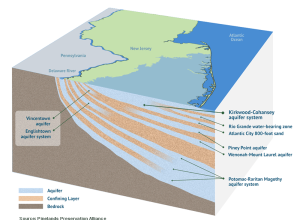
 This unique forest ecosystem depends on a fragile aquifer that is under constant threat from overuse and pollution by a growing urbanized population.