Bernardsville is the crown of the Somerset Hills, a borough defined by its mountain setting, historic estates, and a charming village center that has anchored the community for more than a century. Bernardsville didn’t truly develop until the 1890s, when the railroad brought visitors who quickly fell in love with the scenery and decided to stay. Before that, it was just a quiet little hamlet with very little historical importance.
From Proprietors to Parish: The Birth of a Community
The roots of the area go back to 1717, when the site was claimed by William Penn for West Jersey, while John Harrison claimed it for the East Jersey Proprietors during the early days of New Jersey’s colonial period. The village, then known as Vealtown, was a little settlement around Olcott Square, which was incorporated with Basking Ridge, Liberty Corner, and Far Hills into Bernards Township in 1760.
In those early years, community life centered around the Basking Ridge Presbyterian Church.
Carved Into Bernardsville
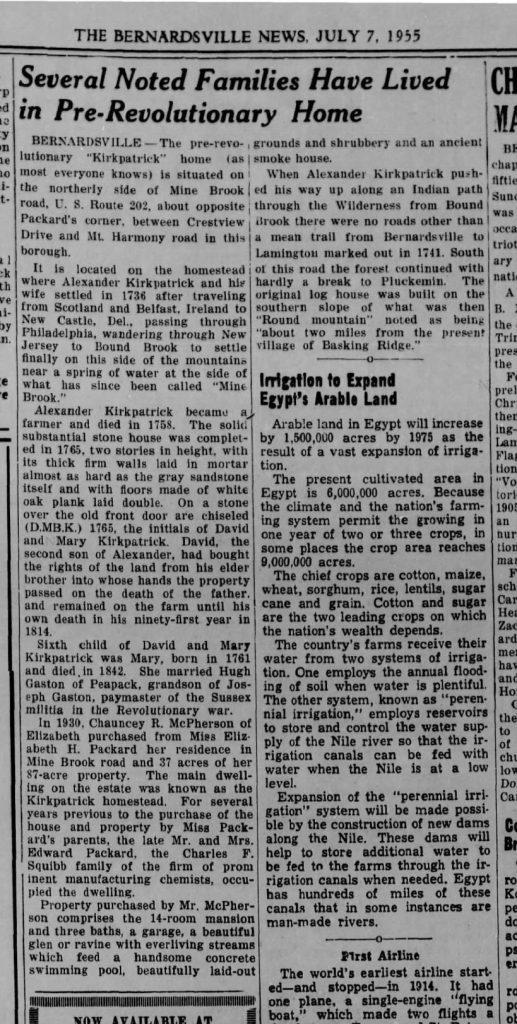
One of the first settlers, Alexander Kirkpatrick, a follower of the English-Scottish royal family, arrived in this country in 1736 and made his home near what we now call Mine Brook, carving out a life in what was then untouched forest.
Life back then came with responsibilities. Kirkpatrick’s land agreement required him to plant apple trees, creating an orchard that lasted for generations and remained part of the landscape until relatively recently. His family left a lasting mark on the town. His son David, who used to walk to church, has left Bernardsville’s oldest existing marker in a stone home that still stands today near Route 202, offering a direct connection to the town’s earliest days. He chiseled into a part of the stone, “DMK1765” ( David and Mary Kirkpatrick)
As time went on, the family’s legacy grew. David became a member of the state legislature, and his son rose even higher, and walked to Princeton College as his dad did, and later served as Chief Justice of the State between 1803 and 1824.
Another piece of local history still stands at the center of town. Today’s library was once a tavern during the Revolutionary War, owned by Captain John Parker. Beyond its role in history, it’s also remembered for a tragic love story that adds a touch of mystery to the building.
There are even whispers of a British spy connected to that same tavern, adding a layer of intrigue and local legend that still captures imaginations today.
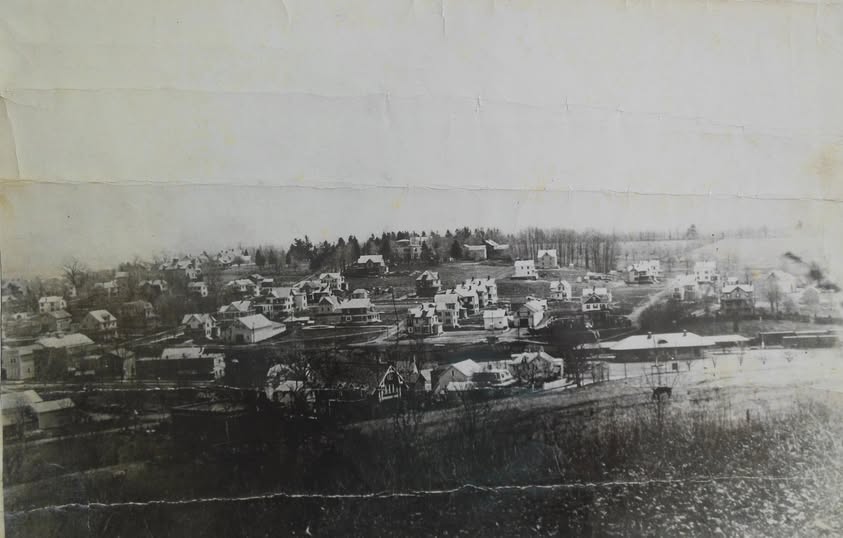
After the Revolutionary War, Vealtown entered a quieter period before being officially named in 1840 after Sir Francis Bernard, the royal governor of colonial New Jersey and Massachusetts in the 1760s. This happened thanks to the campaign of the postmaster of Vealtown, who was picking up the posts at Basking Ridge. Historically, postmasters were so influential that they controlled the official naming, spelling, and recognition of a place.
A Town in Motion
Around this time, the great stone mills of the area were built, the well-known Bunn’s Mill, now the Borough Hall, Van Dorn’s Mill, and Old Stone Hotel, Old Mill Inn, still standing in Olcott Square, reflecting its early industrial life, were all built in this decade.
The community continued to grow with the construction of churches, including a Methodist church built in 1846, showing the steady development of a close-knit town.
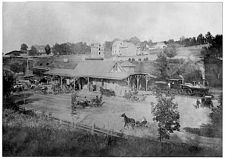
Everything changed again at the end of 1871 when the railroad finally arrived. For about 20 years, Bernardsville was the end of the line, bringing new visitors, new opportunities, and a completely new energy to the area.
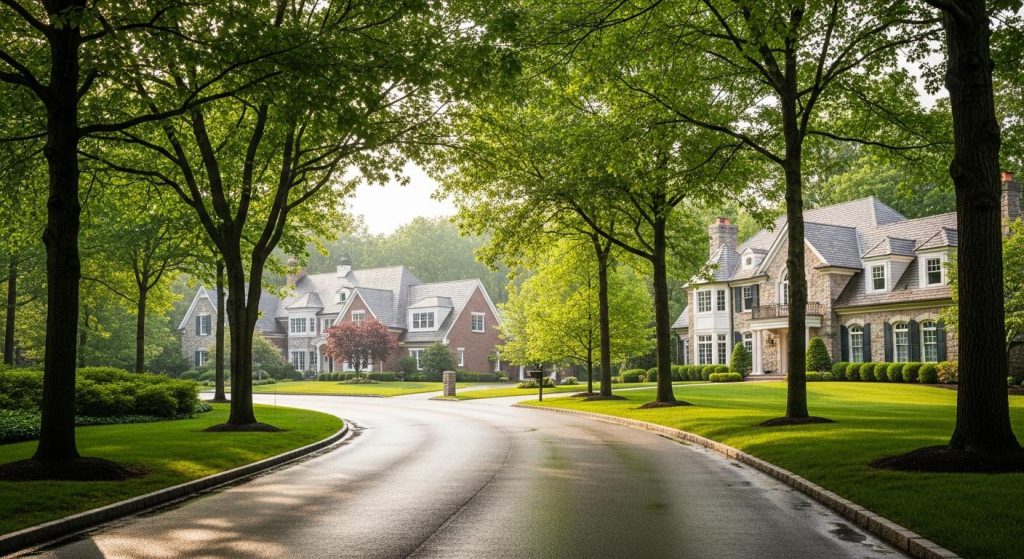
That energy attracted wealthy families who built beautiful estates, transforming Bernardsville into a sought-after “mountain society” destination known for its elegance and natural beauty. Perched along the southern ridge of the Schooley’s Mountain range, the town grew from a simple mountain hamlet into one of New Jersey’s most distinguished residential enclaves, shaped by the same Gilded Age families who transformed the region into a retreat of culture, architecture, and country living. The town became lively and fashionable. Picture horse-drawn carriages, stylish visitors, and a vibrant social scene that turned everyday life into something special.
Once part of Bernards Township, it incorporated in 1924 to preserve its unique character: wooded hillsides, winding roads, and a refined yet welcoming downtown. Today, Bernardsville offers a rare blend of privacy, heritage, and convenience, making it one of New Jersey’s most sought‑after addresses for those who value beauty, history, and a sense of place.
Beneath the Mountain: The Untold Character of Bernardsville
Bernardsville holds a quiet constellation of little‑known stories that reveal just how unusual this mountain community truly is. Long before the Gilded Age estates arrived, the Bernardsville Mountain served as a 19th‑century health refuge, where doctors sent patients to recover in the cool, pine‑scented air.
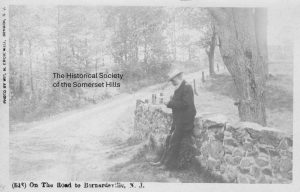
Beneath those forests lies billion‑year‑old granite from the Reading Prong, a prehistoric backbone that shaped the town’s dramatic topography, the stone walls that still line its roads, and even the homes themselves — many Bernardsville basements stay naturally cool year‑round because they’re built directly into this ancient rock.
As the Mountain Colony grew, the needs of the hillside community began to diverge sharply from those of the flatter, agrarian Bernards Township below; the mountain required its own fire protection, infrastructure, and services tailored to large estates and winding terrain, and the township wasn’t structured to support that lifestyle. Wealthy families responded by funding their own private fire brigade, while the Bernardsville train station quietly maintained a discreet VIP waiting room for estate owners arriving from New York.
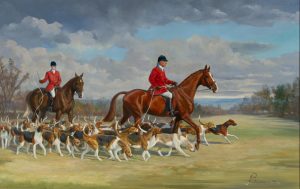
The town’s fox-hunting culture was so refined that the hounds lived with heated floors and a dedicated cook, while, just as remarkably, institutions like the Olcott Avenue School gained national attention as a model of progressive education—showing that Bernardsville’s distinction extended well beyond estates and sport into the world of ideas and the education of its children.
Even the land itself carries history: remnants of a Revolutionary War route still cut across the mountain, unnoticed by most hikers. And in the early 1900s, Bernardsville deliberately rejected plans to become a bustling resort town, choosing instead to preserve its privacy, its landscape, and its quiet elegance. This decision still defines its character today.
Where Nothing Has to Be Sacrificed
What sets Bernardsville apart is its rare dual identity: a walkable, historic downtown filled with cafés, boutiques, and the iconic Olcott Avenue district, paired with sweeping hillside properties just minutes away, tucked into forests, meadows, and ridgelines. It is one of the few places in New Jersey where you can live on a mountaintop with panoramic views and still walk to dinner, the train, or the library.
For buyers who think in terms of both lifestyle and long-term value, Bernardsville stands out. Generous lot sizes, low-density zoning, and a strong sense of local control help protect property values, while direct train access to New York and a vibrant village center add everyday convenience. It is a town that offers privacy without isolation, character without compromise, and a track record of enduring appeal. In Bernardsville, you’re not just buying a home—you’re investing in a way of living that holds its value over time.




 topography, the stone walls that still line its roads, and even the homes themselves — many Bernardsville basements stay naturally cool year‑round because they’re built directly into this ancient rock.