PIEDMONT CORRIDOR, The Central New Jersey’s Transportation Belt
The Passage Carved by the Land
The Piedmont Corridor is not a highway or a single road. It is a natural passage formed by the state’s geography, running through central and northeastern New Jersey and linking the Hudson River port system in the east with the Delaware River port system in the west. On a map, it may look north–south in places, but functionally it operates as New Jersey’s primary east–west connector.
What makes this corridor even more remarkable is that long before modern highways or railroads existed, Native American trading paths already followed nearly the same route, recognizing the natural advantages of the low, flat terrain. Later, early colonial paths, stagecoach routes, canals, railroads, and eventually major highways were superimposed on these ancient pathways. In essence, modern transportation was not invented here—it was rediscovered.
Trade Followed the Land
The Transportation Backbone of NJ
When merchants and travelers needed a dependable route between the two dominant ports—New York on the Hudson and Philadelphia on the Delaware—this corridor naturally became the most direct and practical option. Over time, it evolved into the transportation backbone of New Jersey. For centuries, commerce, settlement, and infrastructure followed this same line, making it one of the rare places where history, geography, and opportunity align almost perfectly.
This route sits along a natural geological “gateway” between the rugged Highlands to the north and the fertile Inner Coastal Plain to the south. Because of this narrow passage, goods moving between the Hudson and Delaware valleys were funneled through the same corridor for centuries, concentrating trade, inns, blacksmith shops, and markets along the way. Unlike the surrounding rugged hills and forests, this corridor formed a natural artery for trade and travel across New Jersey. As you can see, it wasn’t the early engineers who chose this corridor; geology forced them into it. This strip of land would function as New Jersey’s natural industrial engine, where movement of goods, people, and ideas continuously fueled growth and innovation.
Where Rivers Drop and Industry Rises
Most of the corridor lies within the Piedmont, a name derived from the Italian Piemonte, meaning “at the foot of the mountain,” and its flatness is no accident—it is the result of ancient faulting and long erosion that created one of New Jersey’s most construction-friendly landscapes.
This mattered enormously: flat land meant cheaper roads, straighter rail lines, fewer mechanical failures, and faster, safer movement of goods long before modern engineering. Yet the Piedmont was never destined to be merely flat ground. Its rivers accelerate across this plateau and then suddenly drop toward sea level at the 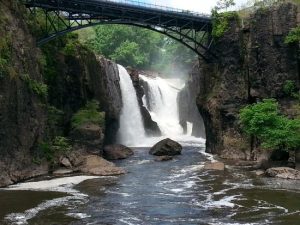 Fall Line, creating rapids and waterfalls such as Little Falls on the Passaic and the Great Falls at Paterson. Had regional drainage tilted differently—sending more water south toward Cape May instead of east toward the Hudson—this natural corridor between the Delaware and Hudson might never have formed, and New Jersey’s economic geography could have looked entirely different.
 Alexander Hamilton recognized the strategic power hidden in this geology: the 77-foot Great Falls could generate reliable energy at a time when “waterpower”, not steam or electricity, was the lifeblood of industry. This insight led to the deliberate founding of Paterson as an industrial city through the Society for Establishing Useful Manufactures, making it one of the first planned industrial centers in the United States.
What makes Hamilton’s vision even more fascinating is how bold—and unusual—it was for the time. Rather than relying on scattered mills along rural streams, Alexander Hamilton imagined something closer to a European-style industrial hub: a city where waterpower would be engineered, managed, and distributed through a system of canals so that dozens of factories could share the same energy source. At Great Falls of the Passaic River, engineers built an intricate network of raceways—stone channels that diverted water from the falls and carried it through the growing industrial district. Remarkably, parts of this waterpower system remained in use well into the 20th century.
Few people realize that Hamilton viewed the industry not only as an economic development but also as a matter of national security. The young United States still depended heavily on European-manufactured goods, which worried him deeply. By building a powerful manufacturing base at Paterson, he hoped the country could produce its own textiles, machinery, and military supplies instead of relying on imports.
The results were extraordinary. Within decades, Paterson became known as the “Silk City,” producing a large share of America’s silk, locomotives, and precision machinery. Even the engines and components that helped power early railroads and bridges across the country were forged there—direct descendants of Hamilton’s original vision.
 Southward, Trenton rose at its own Fall Line, where the Delaware’s drop powered mills and workshops. Trenton’s Fall Line offered its own industrial magic. The city became a proving ground for innovation, where waterpower from the Delaware was harnessed to drive mills, foundries, and workshops. Trenton proudly earned the slogan: “Trenton Makes, The World Takes,” a statement of the city’s global reach. Among the pioneers who built this reputation was John Roebling, who established a wire rope factory here in the mid-19th century. Roebling’s factory drew on the steady energy of Trenton’s waterways to power its machinery, producing wire rope so strong and reliable that it eventually formed the cables for the iconic Brooklyn Bridge.
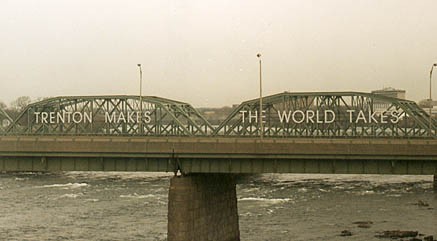 This connection between waterpower and world-class engineering highlights the hidden genius of New Jersey’s Fall Line. It wasn’t just geography that shaped industry—it was the ability of innovators like Hamilton and Roebling to see potential in every drop of falling water, turning local resources into creations that literally spanned rivers, cities, and continents.
In Paterson, Hamilton’s raceways still whisper the story of a city built around canals and waterfalls, where the roar of water once powered early silk looms and precision machinery. In Trenton, Roebling’s wire rope factory transformed raw metal into cables that not only held up the Brooklyn Bridge but also helped advance suspension bridge design worldwide. Even smaller mills along the Fall Line contributed to a hidden network of innovation, producing everything from pottery to locomotives, proving that the genius of New Jersey industry was as much about vision and engineering as it was about natural resources. The legacy remains today, etched in the landscape, the city layouts, and the very bridges and machines that continue to carry the mark of this extraordinary synergy between nature and human ambition.
The Natural Artery of New Jersey Powers Industry
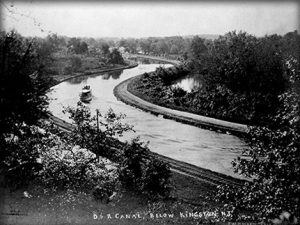
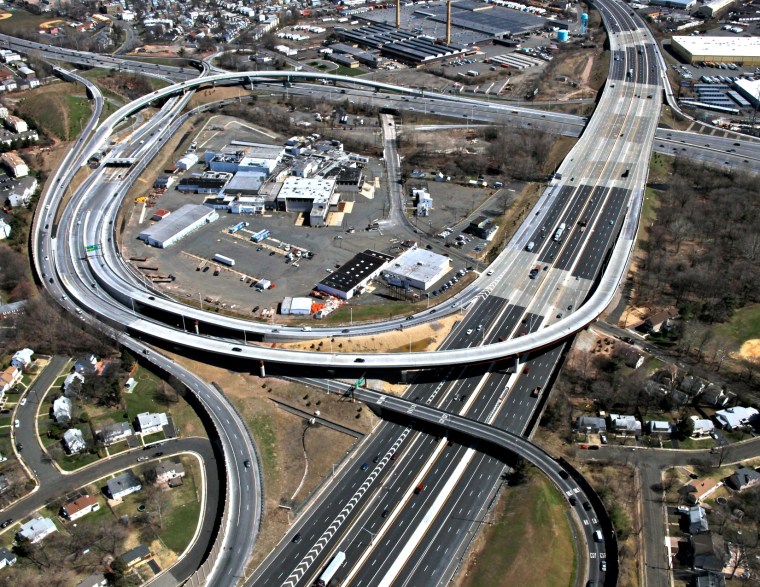
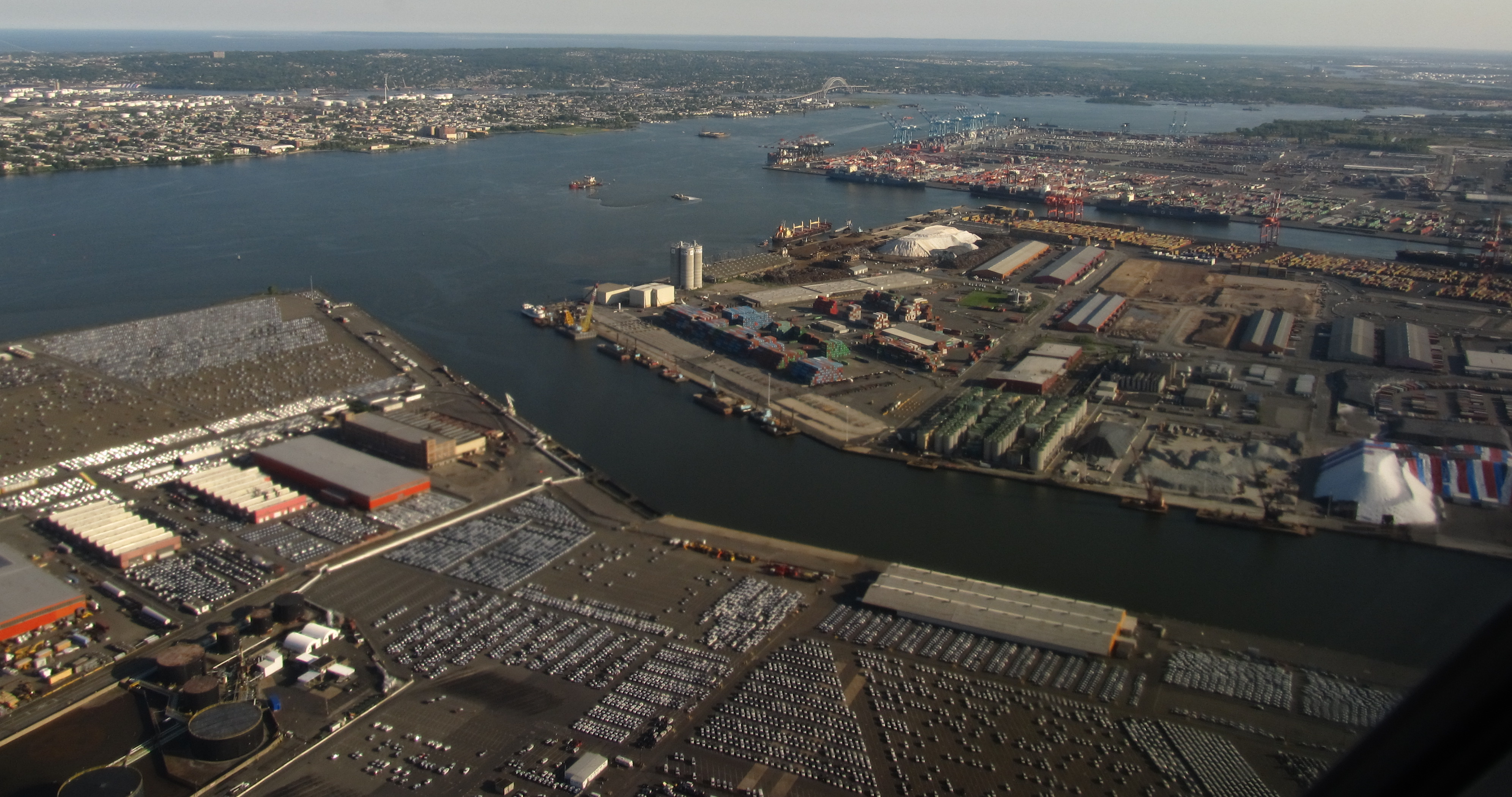 Layer upon layer of transportation history sit in the Piedmont Corridor. Native American footpaths, colonial trade roads, the Morris Canal, which was built in the 19th century to move coal, early rail lines, and today’s highways such as I-78, I-287, Route 1, and Route 22. These routes weren’t preserved out of nostalgia—they endured because they already solved the terrain problem.
Where movement was easy, settlement followed. The corridor played a central role in the growth of Newark, Elizabeth, New Brunswick, Trenton, and Somerville, cities that remain anchors of New Jersey’s economy today.
 Unlike mountains or rivers, which often divide regions, the Piedmont Corridor does the opposite. It stitches New Jersey together, allowing the state to develop not as isolated local systems, but as a single, integrated economy.
That integration continues to shape modern industry. Companies located in the Piedmont Corridor can reach both New York City and Philadelphia within a single workday—a logistical advantage that has mattered since the 1800s and still matters today. Historically, many factories here were built smaller but denser, anticipating future rail and road expansion. That foresight is one reason these older industrial buildings adapt so well to modern reuse, from loft housing to research labs and mixed-use developments.
Today, the corridor supports a wide range of industries, including logistics and warehousing, pharmaceuticals and life sciences, finance and insurance, corporate headquarters, technology and research, and major healthcare systems. This diversity makes it one of the most economically resilient regions in the state.
Educating the Region Means Elevating Its Value
Education is one of the corridor’s quiet power sources. Institutions such as Rutgers University in New Brunswick, Princeton University, 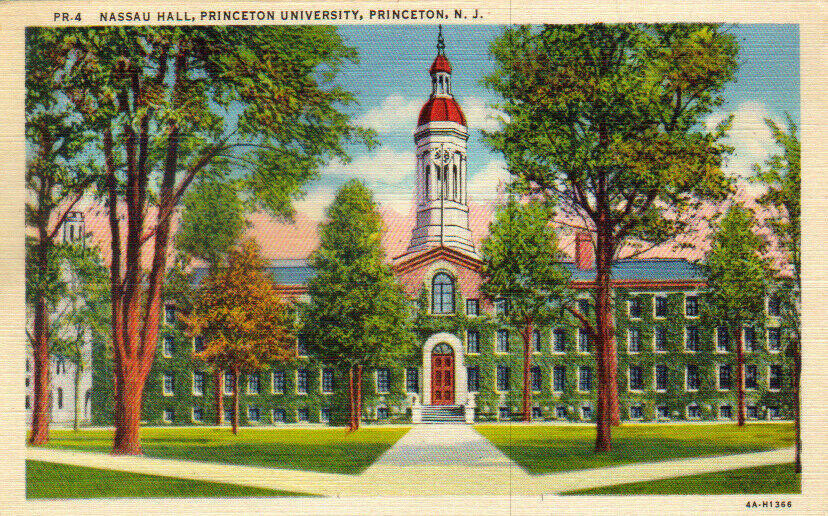 NJIT, Seton Hall University, Kean University, and Montclair State University continually inject talent, research, and cultural energy into the region. These universities act as steady engines of knowledge, innovation, and workforce development.
Their presence keeps the corridor young, skilled, and dynamic, strengthening both housing demand and rental markets. Beyond employment, they foster research, entrepreneurship, and cultural life—elements that quietly but powerfully support long-term real estate value.
The Piedmont Corridor is New Jersey’s most productive and culturally diverse region, where flat geography, layered infrastructure, world-class universities, and a mobile, educated population combine to sustain long-term economic and social strength.
From a real estate perspective, The PiedmontCorridor stands out as one of the state’s most strategically valuable regions because its strength is structural, not trend-based. Demand here is permanent rather than speculative, driven by accessibility that cannot be replicated elsewhere.
Property Snapshot in this stable market and strategic decisions

With multiple layers of transportation—interstate highways, commuter rail, and regional transit hubs—the corridor offers efficient access to both New York City and Philadelphia. This connectivity supports a broad employment base across pharmaceutical companies, healthcare, finance, technology, logistics, and higher education. For buyers and investors, that diversity matters: it stabilizes home values through economic cycles, sustains a strong renter base, and ensures consistent absorption of new housing.
Adding to the stability of the market, the presence of major universities and colleges amplifies property values. Universities generate steady rental demand from students, faculty, and staff, attract cultural and economic activity, and foster innovation hubs that draw high-skilled workers—all of which translate into long-term real estate appreciation.
Because much of the land was developed early, zoning is well understood, infrastructure is mature, and large-scale surprises are rare—a significant advantage for long-term ownership. The corridor also features historic walkable downtowns, adaptive reuse of former industrial buildings, limited land for overbuilding, and continuous reinvestment rather than boom-and-bust cycles.
“In this market, employment fuels growth. It’s jobs, not hype, that keep housing values strong.”