“The Handsomest And Pleasantest Country Man Can Behold.”
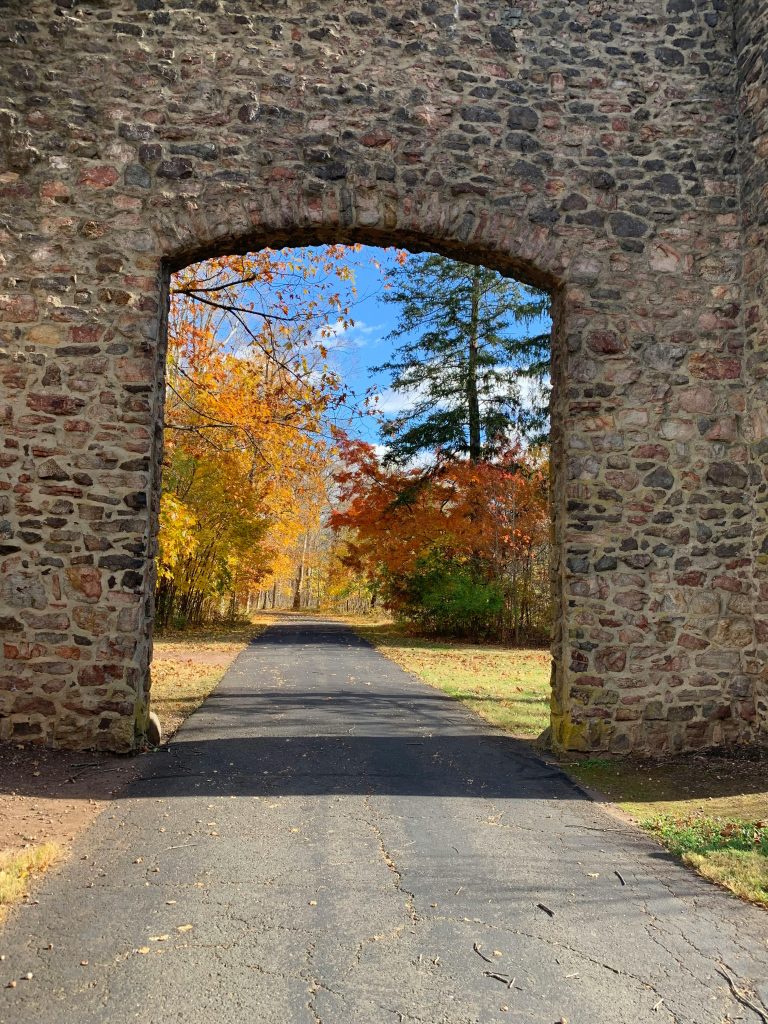
Duke Farms
Indian Chapter
If you think Somerset County is a hidden gem today, you’re about 375 years behind the curve. Long before it had a name, this land was already capturing attention and admiration. It was already home to the Lenape Native Americans, particularly the Raritan band, who lived on and cared for this land for generations, drawn by its fertile soil, flowing rivers, and natural beauty.
Dutch Chapter
When Dutch explorers first laid eyes on the Raritan Valley in the 1600s, it was, in every sense, love at first sight. At the time, the region was part of New Netherland, shaped by the ambitions of the Dutch West India Company. Cornelius van Tienhoven, the colony’s secretary, famously described it as “the handsomest and pleasantest country man can behold.” It wasn’t just admiration. It was recognition of a place with extraordinary promise. Dutch settlers introduced trade, mills, and farming techniques, laying the groundwork for permanent communities.
English Chapter
But this Dutch chapter did not last. In 1664, the English seized New Netherland and divided the land. Lord John Berkeley received West Jersey, the southwestern portion of the colony, while Sir George Carteret took East Jersey, which included present-day Somerset County. Carteret later sold shares to a group of 24 Proprietors, who managed land grants and welcomed settlers, including Scottish families who brought their farming traditions, community organization, and Protestant values.
German, Swiss…
Over the years, German and Swiss settlers arrived, adding craftsmanship and village-style communities. Enslaved Africans contributed labor to farms and estates, shaping the early economy. Later waves of Irish, Italian, and other European immigrants arrived in the 18th and 19th centuries, followed by modern communities from Poland, India, Latin America, and Asia, enriching the culture, food, and neighborhoods of Somerset County.
Boundary Disputes
Boundary disputes were another challenge. Early surveys were imprecise, and overlapping land grants from East and West Jersey created confusion, but over time, officials formalized boundaries, allowing towns and farms to thrive.
Establishment of Somerset County
By 1688, Somerset County was officially established, but its story had already been unfolding for decades. From Lenape stewardship to Dutch admiration, English organization, Scottish and German traditions, and modern immigrant communities, Somerset County has always been a place of diverse peoples shaping a single remarkable landscape. Centuries later, that same charm and promise remain, and it’s easy to see why Somerset County continues to be one of New Jersey’s most desirable places to call home.
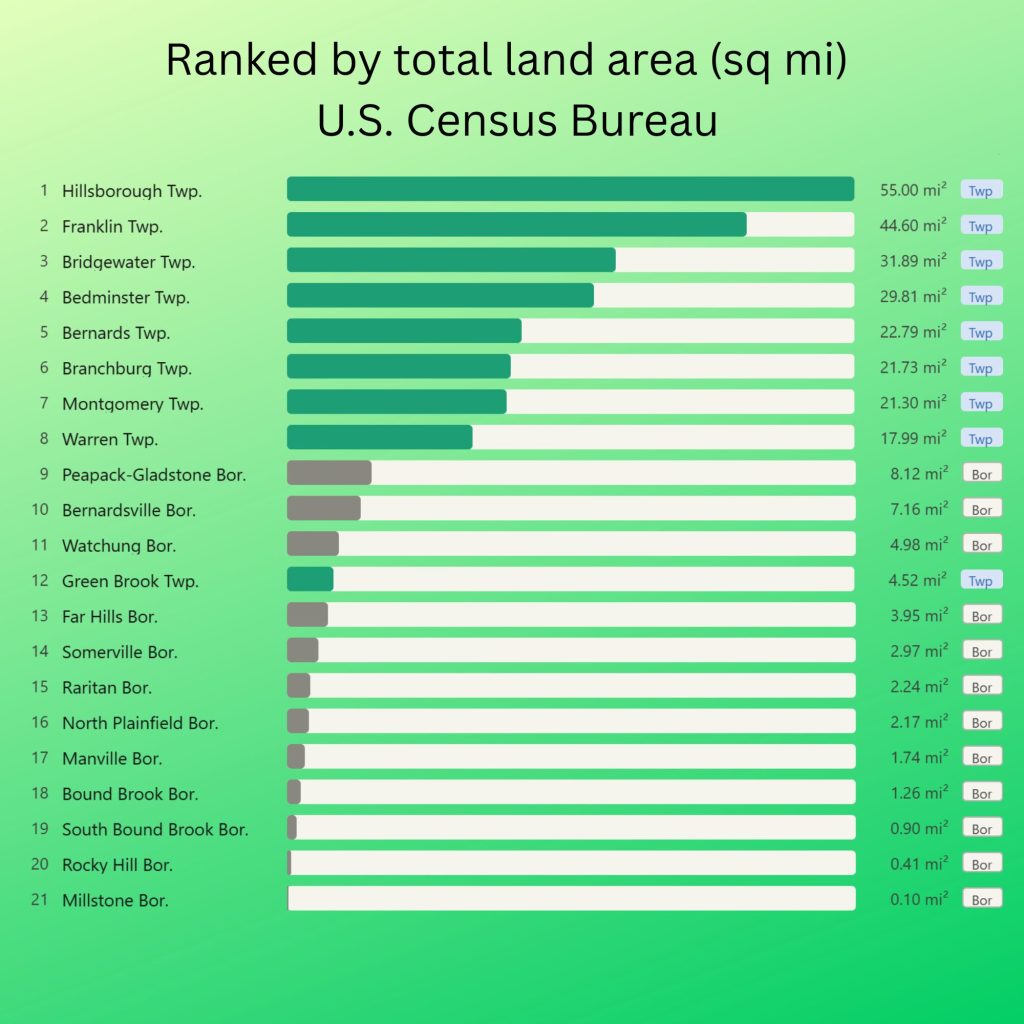
21 Municipalities of Somerset County
While people often refer to these places as “towns” in conversation, Somerset County currently has no municipalities officially incorporated under the ” Town “, ” Village”, or ” City ” forms of government. They are strictly Townships and Boroughs.
In Somerset County—and throughout New Jersey—the distinction between a Borough and a Township often feels like a riddle. While they both provide the same essential services like trash, schools, and police, the difference usually comes down to density, history, and the “vibe” of the community.
Think of a Borough like a classic ” Town Center. ” These are typically smaller, more densely populated, and walkable. They usually are formed around a specific hub, like a train station or a historic crossroads.
The Townships are usually much larger in land area. They were historically agricultural with the “Country” Feel and are often made up of several smaller sections or villages rather than one single downtown. Because they cover vast acreage, they might have more “open space” taxes or complex school districts that serve multiple sprawling sections.
There are 10 Townships and 11 Boroughs of Somerset County. The 21 Municipalities of Somerset are:
HISTORY of SOMERSET COUNTY
The early history of Somerset County is a narrative of territorial expansion, diverse immigration, and the transition from a “triangular wedge” of land into a self-governing agricultural hub.
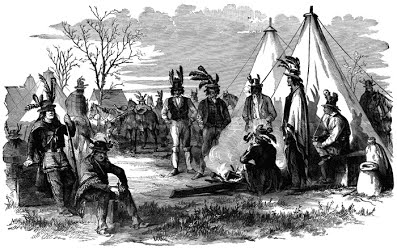
The history of the Lenni Lenape in Somerset County is a story of a sophisticated, semi-nomadic society that lived in harmony with the Raritan Valley long before the first European surveyors arrived. Belonging primarily to the Raritan and Neshanic groups, these “Original People” managed the land through a cycle of seasonal migration, shifting their villages every fifteen to twenty years to prevent the exhaustion of local game and soil. They were not merely hunters; they were expert farmers who cultivated corn, beans, and squash, named ” The Three Sisters,” on the fertile floodplains of the Raritan River. The Lenape did not recognize the concept of “exclusive” land ownership. When they negotiated with early settlers for the “Raritan Lots,” they believed they were granting a shared right to use the land’s resources, rather than permanently selling the territory.
While the arrival of Dutch and Scottish settlers eventually led to their displacement, the Lenape left an indelible mark on the county’s map. Names like Watchung (hilly place), Neshanic (double stream), and Raritan (forked river) remain as permanent echoes of the first people who called this region home.
The displacement of the Lenape was the first major shift in the county’s destiny, moving it from a shared wilderness to a structured landscape of manors and institutions. Their departure marked the end of a communal era.
In 1683, the province of East Jersey was officially divided into its first four counties: Middlesex, Essex, Bergen, and Monmouth County. These were established to organize the growing colonial population and provide local administration.
At this time, Somerset did not exist; the land was still part of Middlesex. It was only five years later, in 1688, that the Scottish settlers, led by Lord Neil Campbell, desired autonomy, which led to Somerset being “carved out” to protect their unique manorial interests and provide a more accessible local government. These immigrants, fleeing political turmoil in Scotland, sought to establish a manorial social order of large estates and tenant farming rather than the small-scale freehold farms common elsewhere. For these Scottish proprietors, being part of Middlesex County was physically and culturally distant.
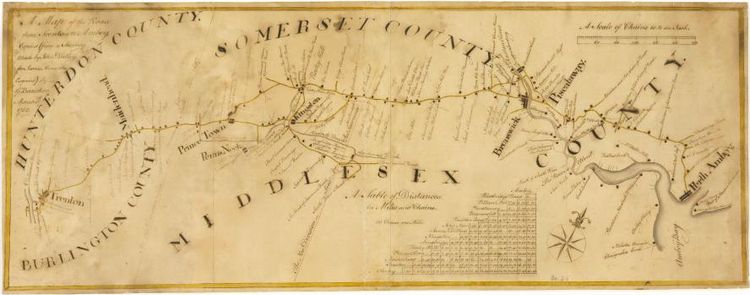
But it wasn’t just about distance; it was about autonomy. They didn’t want to be a “wing” of someone else’s county; they wanted a center of gravity that reflected their own values. The foundation of Somerset County was built by people who refused to be “far away” from the center of their own world.
Despite Scottish influence, the county’s early administration was often chaotic, marked by land title riots, a failed consolidation into the Dominion of New England, and a period in which Somerset was denied the right to form its own townships due to its small size. This changed in 1709 when Governor Richard Ingoldsby annexed a significant portion of Middlesex County, moving the boundary eight miles down the Raritan River to give Somerset the territory and water access needed to compete with its neighbors.
 This expansion paved the way for a major influx of Dutch settlers from Long Island, who were already second- and third-generation Americans, knowledgeable about the climate and suitable crops and livestock. They were drawn by cheap land. They could buy enough land in New Jersey for all their sons when they sold their farms in Long Island. The Dutch were renowned for their large broods of children who made up the family work force. One family that outdid all their neighbors, the Family of Christian and Altje Van Doren of Middlebrush, had 352 descendants when Altje died at age 96.
But there was still a chronic shortage of manpower for cutting down the trees and grubbing out stumps, and a more immediate way to gain manpower was to buy African slaves. The Dutch were not the only ones who used them, but the incidence of slaveholding was noticeably greater among the Dutch population. Somerset came to have the second-highest black population in New Jersey, exceeded only by Bergen, the State’s other Dutch county.
The concentration of these settlers was so significant that the main road between New Brunswick and Princeton became known as Old Dutch Road.
The religious and educational foundations of Somerset County were primarily built by Presbyterian and Dutch Reformed congregations throughout the eighteenth century. Starting with the Basking Ridge Presbyterian Church in 1717, several prominent churches were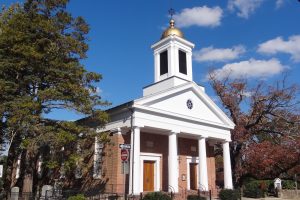 established, while the Dutch Reformed community expanded from its first record at Finderne in 1699 to a network of congregations served by influential leaders like Theodorus Jacobus Frelinghuysen. Because it was difficult to secure trained clergy from Europe, both denominations were driven to found their own institutions of higher learning in the New World. This led to the creation of the Presbyterian College of New Jersey, which moved to the rural serenity of Princeton, which was still Somerset County in 1756 until Mercer County was formed in 1838, and later the establishment of Queens College, now known as Rutgers, in 1766 to satisfy the Dutch preference for education in their own language. These efforts were supported by a rapidly growing colonial population, which saw New Jersey expand to over 60,000 residents by 1747 as settlement frontiers pushed steadily northward into the hill country.
Ultimately, less than a century after its founding, Somerset had evolved from the once-forested frontier to a prosperous agricultural hub of 10,000 residents, defined by a spirit of self-governance and a diverse cultural landscape.
Which one is right for you?
What most buyers don’t realize is that in New Jersey, the difference between a borough and a township can quietly determine how much political power you actually hold as a homeowner. Boroughs were historically formed by residents who broke away from townships, often over tax disputes or dissatisfaction with local services, giving them a scrappier, more independent civic DNA that still influences local politics today. That rebellious origin has a surprisingly modern payoff: borough residents often find that a single phone call to town hall actually gets something done, while township residents may discover their voice is one of thousands spread across vast districts. Daily life reflects this, too. In a borough, your kids’ crossing guard knows your family by name, and a zoning variance on your neighbor’s fence becomes the talk of the coffee shop; Township and boroughs are both equal under New Jersey law! They are just different ways of “slicing the pie” of local government. Just think about whether you are looking for a “Main Street” or “Big Backyard” lifestyle.
For more information, please check https://somersethillshistoricalsociety.org/