A Township Born in the Crossfire of History
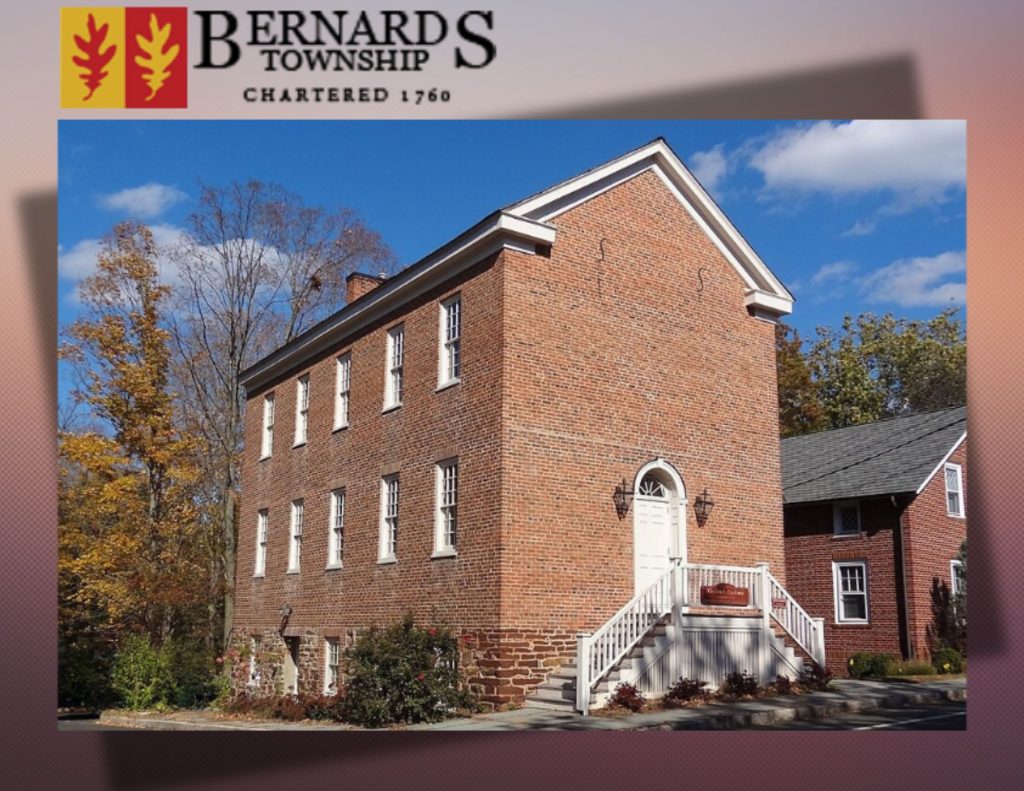
 Bernards Township’s earliest story begins with tension, not tranquility. The land dispute in 1717 between William Penn’s West Jersey interests and East Jersey Proprietors did not result in an agreement, leaving the entire area legally uncertain and officially claimed by two powers at once. While the authorities argued, settlers came anyway, carving farms and footpaths into the wilderness and forming the tiny crossroads village of Vealtown around what is now Olcott Square. Community life soon gathered around the Basking Ridge Presbyterian Church, which became the spiritual and social anchor of the growing settlement. The long‑standing land dispute finally ended in 1760 when King George II issued the royal charter that created Bernards Township, uniting Vealtown, Basking Ridge, Liberty Corner, and the surrounding farms under one name and one authority. After the Revolution, the township became one of New Jersey’s original municipalities in 1798, transforming a once‑contested frontier into a unified community whose layered beginnings still give the area its depth, character, and unmistakable sense of place.
The Evolution of a Timeless Township

Bernards Township grew in a way that feels almost organic, shaped more by people and landscape than by any grand colonial plan. After the 1760 royal charter settled the old land dispute, the small villages of Vealtown, Basking Ridge, and Liberty Corner began to mature into defined communities. Farms expanded, mills appeared along the brooks, and the Basking Ridge Presbyterian Church became the social and spiritual center that anchored daily life. By the early 1800s, the township’s crossroads location made it a natural stop for travelers moving between New York, Philadelphia, and the interior colonies, bringing commerce and new families.
When the Whistle Changed Everything
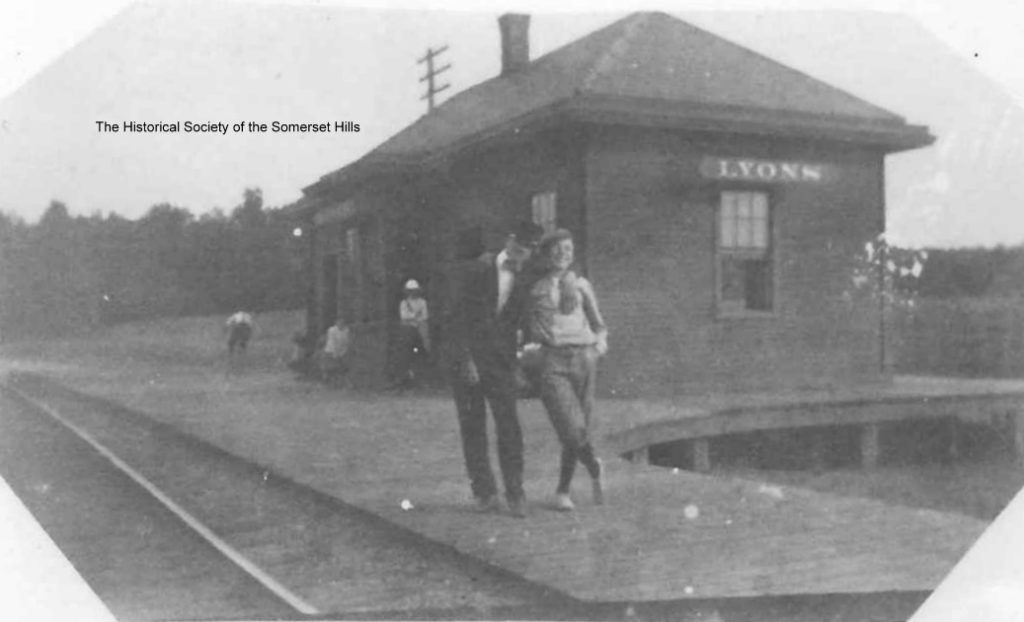
When the railroad arrived in nearby Bernardsville in 1872, extending toward Lyons and Gladstone, it connected the area to New York City; it didn’t simply bring passengers. It quietly rewired the entire identity of the region. Before the tracks were laid, Bernards Township was a world of farms, mills, and dirt roads, where travel to New York could take a full day by carriage. But once the trains began running, the township entered a new era that historians often gloss over.
The first major shift was temperature. New Yorkers discovered that the Somerset Hills were often 10–15 degrees cooler in summer than the city. This wasn’t advertised but whispered among wealthy families who wanted an escape from Manhattan’s heat, disease, and overcrowding. They began arriving with trunks, servants, and architects, building summer estates on the ridges and hills. This is how the area quietly became part of the Gilded Age country‑house circuit, even though Bernards Township itself never flaunted it.
The railroad created the first true commuters in the region, not in the 1950s but in the 1880s. A handful of lawyers, bankers, and newspaper editors began living in the Somerset Hills and taking the early train into Newark or New York. This was revolutionary at the time. It meant Bernards Township was one of the birthplaces of American suburban commuting, decades before the word “suburb” became common.
The railroad also changed the soundscape of daily life. Farmers who once relied on horse‑drawn wagons now heard the distant whistle of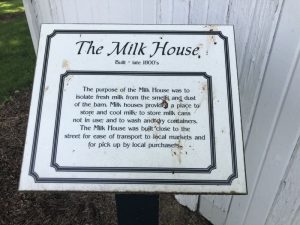 trains at dawn and dusk. Milk, produce, and even cut flowers were shipped to New York markets overnight, giving local farms a level of prosperity they had never experienced. Some families built small “milk houses” near the tracks, tiny structures where fresh milk was cooled and loaded onto early morning trains. A few of these buildings still survive, hidden on private properties.
The arrival of the railroad also brought ideas. Newspapers, books, and magazines arrived faster. Students could attend schools farther away. Ministers, teachers, and artists moved into the area because they could stay connected to the wider world. This is why the Somerset Hills developed a reputation for being rural but cultured, a combination that still defines Bernards Township today.
And the railroad influenced architecture. Wealthy families brought their city architects with them, introducing shingle‑style homes, Tudor estates, and carriage houses that looked nothing like the colonial farmhouses of earlier generations. This blend of styles is why the township’s historic neighborhoods feel so visually rich.
Most importantly, the railroad shifted the township’s identity. What had been a quiet agricultural settlement became a place where city sophistication met country calm. A balance that still draws buyers today.
A Town Built to Learn: The 275-Year Story Behind Bernards Township’s Schools
Education Was Embedded from the Very Beginning (1750s)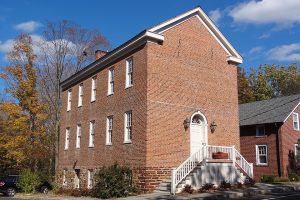
Most towns built schools after they grew. Bernards Township built its identity around education from the start. As early as 1750, a classical school designed to prepare young men for college was established in Bernards Township, in the area known as Basking Ridge, named “Classical School”. It was conducted in ministers’ homes for decades until the Brick Academy was built in 1809 through contributions and partly at its founder’s expense. Pupils came from many other states, not just New Jersey. Residents provided them with lodgings. The Academy produced an unusually high number of judges, attorneys, and ministers, far more than most schools of its time.
This wasn’t a local school. It was a feeder institution for Princeton University. Four U.S. Senators representing New Jersey were Princeton graduates who received their earlier education at the Basking Ridge Classical School. The town’s founding culture was one that valued rigorous intellectual preparation. That ethos didn’t disappear. It got passed down.
It Attracted Wealthy and Elite Residents from the Colonial Era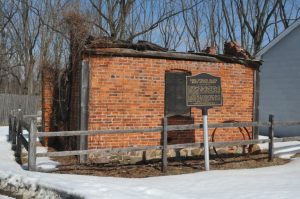
General William Alexander (Lord Stirling) built one of the grandest estates in the Colonies, “Stirling Manor” in Basking Ridge. From the very beginning, this was a town where the well-connected and wealthy settled. Elias Boudinot, signer of the Treaty of Paris, which ended the American Revolution, was also a property owner in the area, as was Samuel Southard, U.S. Senator, Secretary of the Navy, and acting Vice President. When the founding class of a town is composed of senators, generals, and Princeton-educated elites, the local expectations for education stay extremely high across generations.
AT&T Headquarters (1975) — The Corporate Transformation
This is arguably the single biggest turning point in modern history for the township. AT&T’s showcase Basking Ridge campus became the envy of the corporate world from the day it opened in November 1975. This wasn’t just any company. It was the world’s largest corporation at the time. At AT&T’s peak, nearly 6,000 employees worked at the Basking Ridge facility, and AT&T became the largest taxpayer in Somerset County, with total yearly taxes of about $3.9 million, roughly 39% of the total collected in Bernards Township.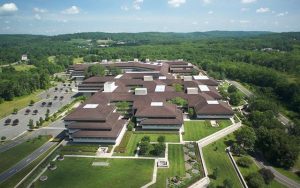
What does that mean for schools? Enormous, reliable tax revenue. More money per student. Better teachers. Better facilities. Year after year.
And the employees themselves mattered just as much as their taxes. AT&T’s workforce consisted of engineers, scientists, and executives. Highly educated professionals who moved to Basking Ridge and became deeply invested in the school system their children attended. Demanding, involved parents with high expectations are one of the most reliable predictors of excellent schools anywhere in the country.
Despite AT&T’s departure in 2002, the school system’s excellence proved durable. The culture of high expectations and academic rigor that decades of corporate wealth had built was too deeply rooted to unravel with one company’s exit.
Interstate Highways (Route 78 and 287) — The Second Population Wave
Almost 100 years after the railroad, the construction of Route 287 and later Route 78 made commuting much easier for those seeking to live in a residential setting. This brought a second major wave of upper-middle-class and affluent families, professionals who could easily reach New York City, Newark, or corporate campuses throughout New Jersey. The town’s population grew while maintaining its socioeconomic profile.
Verizon Wireless and the Corporate Legacy Continues
Basking Ridge is the current headquarters of Verizon Wireless and Peraton Labs, both AT&T successors. The corporate presence that began with AT&T never went away. It simply evolved. This means the tax base and the concentration of highly educated residents have remained intact across decades.
Some Towns Are Built. This One Was Earned.
Bernards Township is not a place that stumbled into greatness. From the colonial ministers who built a Princeton prep school in their living rooms in 1750, to the railroad families who arrived seeking country air and city careers, to the AT&T engineers who raised the next generation of thinkers in these hills — excellence here has never been accidental. It has been chosen, again and again, by people who believed that where you live shapes who your children become. That belief is written into the soil of Basking Ridge, into its 600-year-old oak, into its Blue Ribbon schools, and into every street that still carries the name of a Revolutionary War soldier. When you put down roots in Bernards Township, you are not just buying a home — you are joining a story that has been unfolding for three centuries, and shows no sign of ending.